 Stromboli Volcano Tours
Stromboli Volcano Hike: Routes, Limits and What It Takes
The Stromboli volcano hike is really three different walks stacked on one mountain, and the law decides which one you do. Below 290 m you walk free on the village paths, from 290 m to 400 m a certified guide is required by ordinance, and above 400 m the summit cone is closed outright. This page walks through each band, the fitness and gear the trek demands, what the money goes on, and what you actually see when the craters go off.
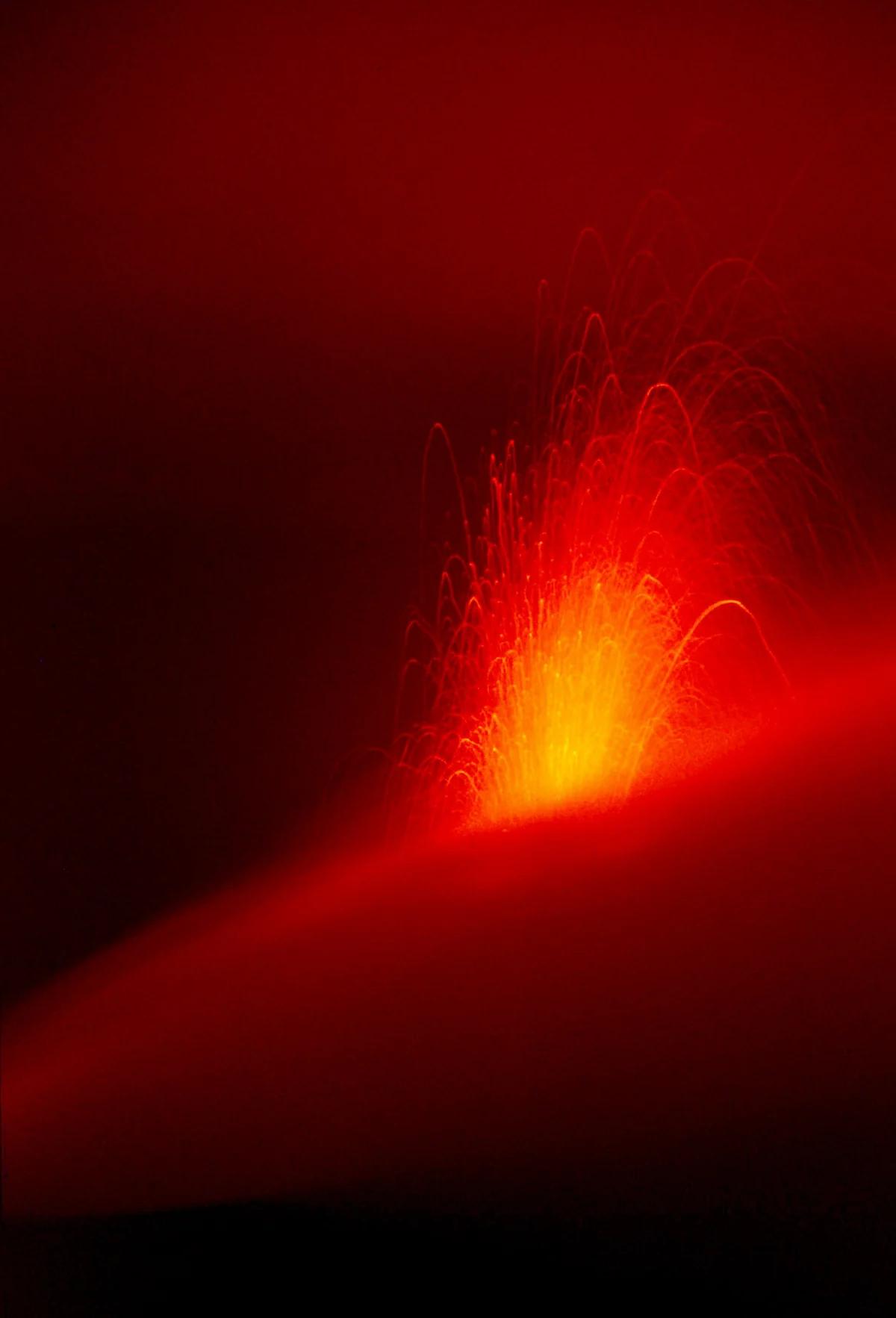
A long-exposure night eruption photographed from height in 1979, when the summit path was still open. Photo: Heinrich Stürzl, CC BY-SA 4.0, via Wikimedia Commons
Quick answer You cannot climb to the summit of Stromboli. The crater rim at 924 m has been closed since the 2019 paroxysmal...
You cannot climb to the summit of Stromboli. The crater rim at 924 m has been closed since the 2019 paroxysmal eruptions, and no operator sells a true summit hike today. What you can do is walk free to 290 m on the village side, or join a certified AIGAE guide for the sunset trek to a viewpoint on the Sciara del Fuoco rim at 400 m. The listings compared on this site sell the guided 400 m trek as their two volcano hikes. Allow about two hours up from the village meeting point, bring 1.5 to 2 litres of water per person and closed hiking shoes, and expect several small explosions an hour in ordinary activity. The only mandatory payments are the Aeolian landing fee of $5.85 (€5) per person in cash and, from Milazzo, a seasonal port eco tax.
Key takeaways
- Summit closed, 290 m free, 290 to 400 m guided only: the rule comes from the Mayor of Lipari's ordinance, not from the tour operators
- The two bookable treks are the Sciara del Fuoco sunset trekking and the sunset excursion
- No entrance ticket exists for the volcano itself, so anyone quoting one is adding a cost no official source confirms
- For timing the trip around weather and sailings, read the best time to visit Stromboli
The Three Altitude Bands That Decide Everything
Every question about hiking Stromboli comes back to one framework: altitude bands written into a standing ordinance. Learn the three lines and every booking decision on this island becomes simple, because the bands tell you where you may walk alone, where you must pay for a guide and where nobody is allowed at all.
Free below 290 m
Paths up to 290 m above sea level on the Stromboli village side are free and need no guide. The classic route starts at Piazza San Vincenzo and climbs through the Belvedere viewpoint near the old cemetery, which sits at about 190 m. From there the path continues into the upper band before the 290 m line cuts it off.
This is the walk you can do at any hour with no booking, no helmet and no fee, and it is genuinely good: the Belvedere alone is high enough above the rooftops to see the night glow from the craters. The rule is not a local custom. It is set out under the Mayor of Lipari's ordinance framework, ordinance n. 100 of 2022, reissued since, and it is enforced on the ground.
The full text and updates sit on the Mayor of Lipari's official site. On the Ginostra side of the island the ordinance allows free access within lower limits, but Ginostra has no volcano-path tourism infrastructure worth planning a day around, so treat it as a footnote rather than an option. Ginostra is 10 to 15 minutes by boat from Stromboli port and has no road access at all, which makes it a detour for the curious rather than a hiking base.
For almost every traveller the practical free zone is the village side and the Belvedere, and that is where the rest of this page concentrates. Takeaway: if you do nothing else on Stromboli, the Piazza San Vincenzo to Belvedere walk costs nothing and still shows you the crater glow after dark.
Guided from 290 m to 400 m
The band between 290 m and 400 m is open only to groups led by a certified Alpine-Volcanological Guide, an AIGAE guide. The guides who run it are the volcanological specialists based on the island, such as the long-standing team at Magmatrek. Guides carry helmets, set the pace, hold the group back from the exposed edge and read the volcano's behaviour in real time.
That last job matters more than it sounds, because the mountain is monitored around the clock by INGV Osservatorio Etneo under a civil-protection alert protocol, and conditions on a rim 350 to 400 m from active vents can change in minutes. The licensed-guide requirement is law on this volcano, not a sales device invented by tour companies, which is worth remembering when a cheaper listing implies the rule is flexible. It is not, and a group caught above 290 m without a guide is breaking a civil-protection ordinance on one of the most active volcanoes on Earth.
The band is also short: 110 vertical metres of path between the free limit and the closed one, which is why every guided product on the island looks similar on paper. What separates the good ones is timing, group size and how honestly the listing describes the endpoint. Takeaway: treat the 290 m line as a hard wall, and spend your comparison effort on which guided trek runs it best rather than on whether you can skip the guide.
Closed above 400 m
Everything above 400 m up to the crater rim at 924 m is closed, and it has been since the paroxysmal eruptions of 2019. That means the summit climb photos from older blogs describe a route that no longer exists. No operator sells a true summit hike today.
Listings that use the word summit are selling the guided sunset trek to the 400 m viewpoint, and it pays to read the small print with that in mind. The closure exists for a plain reason: in 2019 a paroxysm on this mountain killed a hiker. Rare larger explosions also occurred in 2024.
They are years apart rather than a daily event, but the altitude limits are the whole safety system, and they are the reason every bookable Stromboli volcano hike tops out at the same height. Stromboli is the northernmost of the seven Aeolian Islands and a UNESCO World Heritage site, and its ordinary behaviour, small gas explosions at the crater rims several times an hour, is what gave volcanology the word Strombolian. The summit being closed does not dim the show, because the show happens at the crater rims and is visible, audible and felt from the 400 m ledge.
Takeaway: whenever a listing says summit, read it as 400 m, because 924 m is closed to everyone and will stay that way until the ordinance changes.
The Free Paths: What 290 Metres Gets You
The no-guide option is the cheapest way onto the volcano and a respectable outing in its own right. It suits anyone travelling without a booking, watching a budget, or arriving too late in the day to join a guided group, and it needs nothing but shoes, water and a torch.
The route from the village
Start at Piazza San Vincenzo, the main square of Stromboli village, and follow the path that climbs behind the settlement. The first landmark is the Belvedere near the old cemetery, at about 190 m above the village. It is the classic free viewpoint: high enough for an open line to the crater area, close enough to see the glow after dark.
Bring a torch for the walk back down, because the path is unlit and the village streets are quiet at night. Beyond the Belvedere the path continues upward until it reaches the 290 m line, where signs mark the boundary of the guided-only zone. That boundary is the end of the legal free walk, and stepping past it without a guide is a breach of the ordinance rather than a grey area.
How long the round trip takes is not stated in the official sources, so plan an unhurried evening rather than a timed schedule. There are no cars on the island beyond service vehicles, so the walk starts on foot from wherever your boat lands, and the whole village side is compact enough to reach from the port in minutes. Takeaway: this is the only volcano walk on Stromboli that requires no booking and no payment, and it starts five minutes from the main square.
What you see and what you do not
From 290 m you get the view, the volcanic terrain and, after dark, the glow and bursts of the craters reflected against the sky. What you do not get is the Sciara del Fuoco rim position that the guided trek uses. The Sciara del Fuoco, the channel of fire, is the steep scree funnel on the northwest flank that channels eruptions into the sea.
The guided viewpoint sits on its eastern rim at 400 m, roughly 350 to 400 m in a straight line from the craters, close enough to hear and feel each explosion. The free path cannot reach that position. The difference in practice is the senses: from the Belvedere you mostly see the glow and the flashes, while from the rim you hear the gas charge and feel each burst arrive across the funnel.
The trade is fair though: nothing, no booking and no fee, versus a guided group and a higher ledge. Photographers should also note the geometry. The rim position looks straight down the Sciara toward the vents, while the free path looks at the mountain from the village side, so the compositions are entirely different.
Takeaway: if hearing and feeling the eruptions matters to you, only the guided trek delivers it, but for the classic glowing-volcano photo the free Belvedere is enough.
When the free walk works best
Go up in the late afternoon, sit out sunset at the Belvedere, and stay for the first dark hour when the eruptions read brightest. In ordinary Strombolian activity the craters burst several times an hour, so a clear evening almost always shows something, and weather rather than the volcano is the usual spoiler. The volcano itself erupts year-round when it is in ordinary activity, so visibility is a question of sky, not season.
Boats and treks run from April to early November, and the June to September window brings reliable sunset timing and all departures operating. May, June and September are the quieter months in the sailing season, with warm sea and calmer villages, while July and August are the hottest and busiest. If your dates fall in winter, expect the inter-island hydrofoils to thin out and day trips to become unreliable, which affects the free walk too since you still have to reach the island.
Build the evening around the first two hours of darkness rather than sunset alone, because that is when the bursts show against a black sky. Takeaway: the free walk works best as a late-afternoon to dark outing in the sailing season, and the sweet-spot months are May, June and September.
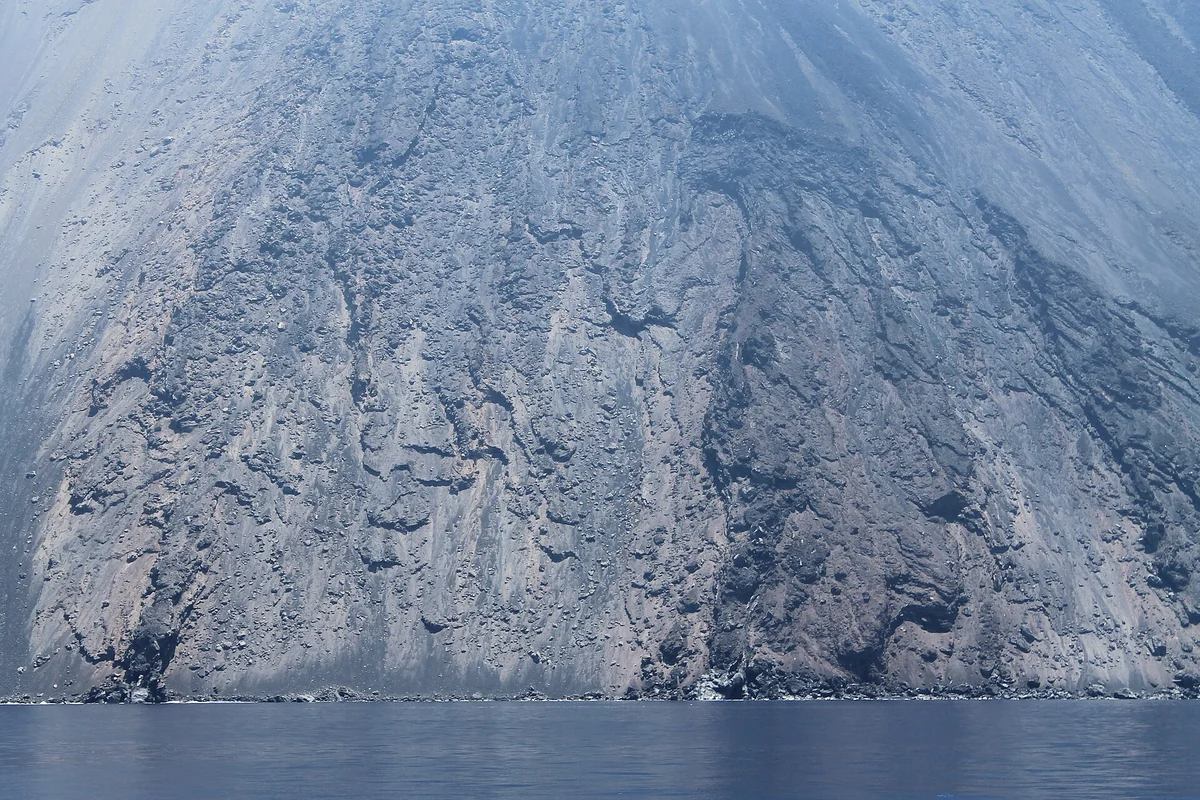
The green north coast the trail looks back on. Photo: Patrick Nouhailler, CC BY-SA 3.0, via Wikimedia Commons
The Guided Trek to 400 Metres
The guided sunset trek is the hike most people mean when they say they climbed Stromboli, and it is the only way past 290 m. This section covers what the two bookable products actually are, how the evening unfolds hour by hour, and why the guide's licence is doing real work at altitude.
What the two bookable treks are
This site lists two versions of the same core product. The Sciara del Fuoco sunset trekking is the full guided climb to the 400 m viewpoint on the eastern rim of the Sciara, timed to reach the top for sunset and the first hours of darkness with the eruptions firing below. The sunset excursion is the lighter version, built around the same eruption-watching window with less climbing.
Both are led by certified AIGAE volcanological guides, both depart from the Stromboli village side, and both run in the roughly April to October sunset season, since they leave about two hours before sundown. The distinction matters for your legs rather than for the view of the eruptions, because the lighter option still lands you in the right window with a professional group. Prices for each are set by the operator and change by date, so check the live listing rather than a printed figure.
Booking, payment and cancellation sit with the platform, not with this catalog, so the cancellation window and any minimum group size live in the listing's own terms. Takeaway: choose the full trekking route if you want the rim itself, and the lighter excursion if you want the same darkness window on tired legs.
How the evening runs
Sunset treks leave about two hours before sundown. The group meets in the village, gears up with helmets the guides carry, and climbs through the same lower paths a free walker uses before crossing the 290 m line as a guided party. The pace is set by the slowest pair of legs, with stops, because the guides' job is to hold the group together on loose scree.
Allow about two hours up from the village meeting point, though exact duration depends on the operator and the sunset hour on your date. At the viewpoint the group stops and holds position on the rim: the craters sit roughly 350 to 400 m away across the funnel, and in ordinary activity several explosions an hour throw glow and spatter that you hear and feel as much as watch. The hold at the top runs through sunset and into the first dark hours, which is the part most people book the trek for.
After the show the descent happens by headtorch, downhill on the same loose black ground, which is the section that punishes bad footwear hardest. Total time on the mountain depends on the operator's own terms and the sunset hour, so read the listing for the exact duration on your date. Takeaway: plan the whole evening around the trek, because from the two-hour departure to the headtorch descent there is no slack for anything else that day.
Why the guide matters up there
Guides carry helmets, set the pace, hold groups back from the crater edge and read the volcano's behaviour in real time. That last part is the one that cannot be replaced by an app. Stromboli is monitored around the clock by INGV Osservatorio Etneo with a civil-protection alert protocol, and the alert level can change.
On the checked dates the weekly bulletins recorded ordinary Strombolian activity from both crater areas with moderate-to-high degassing and no elevated alert in force. But a paroxysm, the rare larger explosion type seen in 2019 and in 2024, gives little notice. It is exactly the kind of event that turns an exposed ledge into a bad place to stand, and a guide who reads wind, sound and vent behaviour is the difference between a held-back group and one lingering too long.
The guides are also the enforcement arm of the altitude bands, since only their licence opens the 290 to 400 m band at all. INGV publishes its weekly bulletins publicly, so if you want to read the mountain's baseline behaviour before you go, the official updates sit alongside the volcanological guides' own site. No tour can guarantee a large burst, and an honest operator will say so.
Takeaway: the fee buys a professional whose job, above all, is knowing when to move the group, and on this mountain that judgement is the product.
Fitness, Gear and Timing
The trek is a straightforward hill walk on paper and a real workout in scree shoes at the end of a hot afternoon. The three variables you control are your legs, your packing and the day you arrive, and this section takes each in turn.
How fit you need to be
The climb to 400 m from the village is a sustained ascent on loose volcanic ground, and difficulty ratings are not stated in the official sources. What the sources do make clear is the shape of it: two hours of climbing before sunset, a hold at the top through dusk, and a headtorch descent. You need steady legs, working knees and the ability to walk downhill in the dark on scree.
Nobody needs mountaineering skills, and the guides set a group pace, but anyone who finds a two-hour uphill walk hard work should choose the lighter sunset excursion or the free Belvedere walk instead. The free option also has no stated duration, so it flexes to whatever pace suits you, while the guided treks run to a sunset clock that does not move. Heat is the hidden factor.
The lower slopes are black, dry and exposed until the sun drops, and the departure is timed to the hottest part of the late afternoon, so the first hour of climbing is the sweatiest. Age limits and fitness requirements per operator are set by each operator's own terms, so read them before booking rather than after. Anyone with knee trouble should think hardest about the descent, not the ascent, because loose downhill scree in the dark is the part that catches people out.
Takeaway: if a two-hour uphill walk sounds heavy, book the lighter excursion or walk free to the Belvedere instead of forcing the full trek.
The gear that matters
The non-negotiables are closed hiking shoes and water: bring 1.5 to 2 litres per person on the trek, because the upper slopes are dry, black and hot until the sun drops. Add a layer for the top after dark, since the viewpoint is exposed and the temperature falls fast once the light goes. A headtorch matters for both the free walk and the guided descent, and a spare set of batteries is cheap insurance on a mountain with no lighting anywhere above the village.
Sandals, deck shoes and empty water bottles are the classic mistakes, and the scree punishes all three. The ground is fine black gravel in places, so ankle coverage earns its keep on the way down. If you are combining the trek with swimming or a boat day, the boat list applies too: swimwear, towel and a windproof layer for the evening run home, when boats hold position off the Sciara after dusk and the crossing back is cooler than the afternoon was.
Everything you bring, you carry, because there are no porters or vehicles above the village, so pack to a strict minimum. Takeaway: shoes, two litres of water, one warm layer and a headtorch cover ninety percent of what the mountain asks for.
Timing the trip
Getting to the island is half the logistics. Most visitors fly into Catania, Palermo or Reggio Calabria, reach the mainland port of Milazzo, roughly 2.5 hours from Catania by road or train via Messina, and sail from there. Milazzo to Stromboli runs year-round with 8 to a dozen sailings daily in high season, by hydrofoil in 1 to 2.5 hours or car ferry in up to 6.5 hours.
From Naples the crossing runs 4.5 to 10.5 hours, seasonal to year-round. Inter-island boats link Lipari to Stromboli in roughly 1 to 1.5 hours, and Messina, Palermo and Reggio Calabria all have seasonal connections of their own. There is no regular passenger ferry from Tropea, and Vibo Valentia has only a seasonal hydrofoil, up to twice weekly, which is why from-Tropea products on the listings are cruises rather than hikes.
On the island there are no cars beyond service vehicles, so the village is on foot and the trailhead is minutes from the port. Build a full day around the trek rather than an afternoon, because late sailings and sunset departures do not leave slack for a delayed ferry. Takeaway: aim for a morning or midday arrival into Stromboli port so a delayed hydrofoil cannot eat the trek's two-hour departure window.
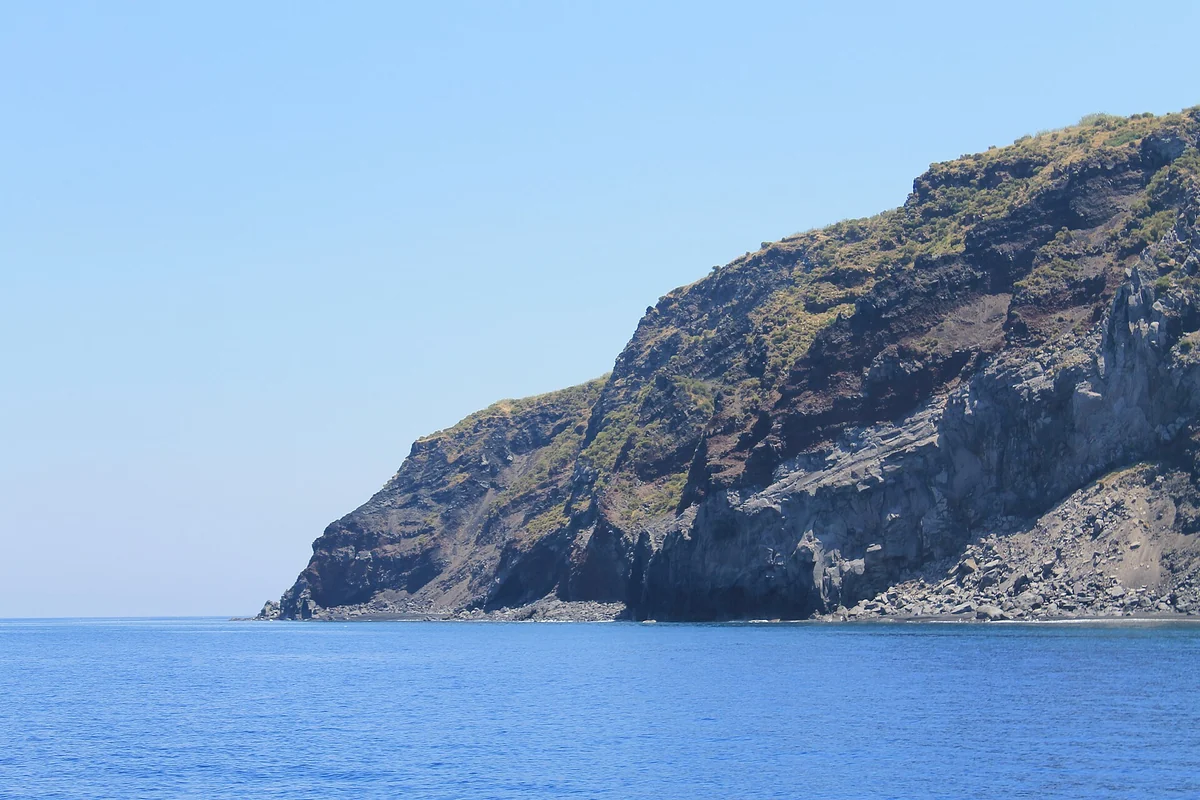
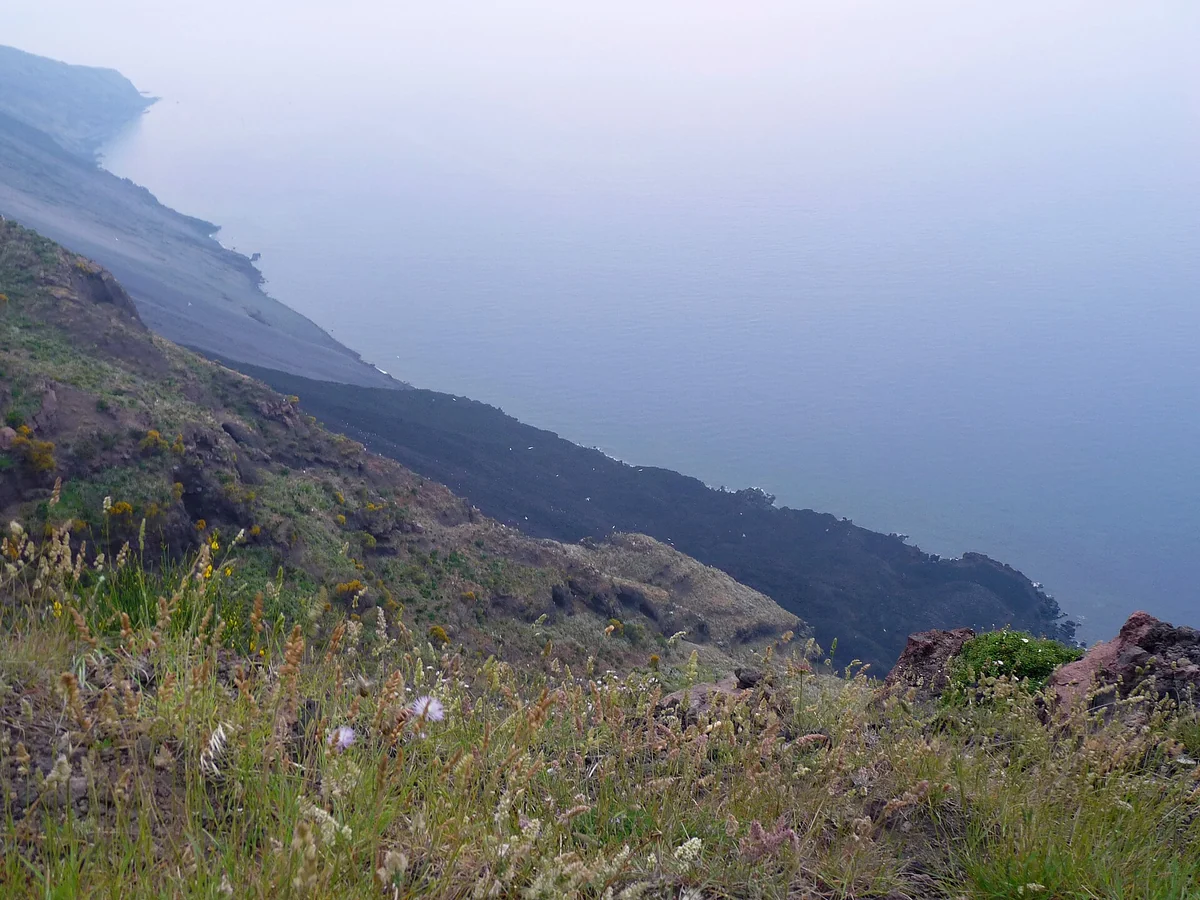
Cliffs on the northern shore, seen on the boat approaches. Photo: Patrick Nouhailler, CC BY-SA 3.0, via Wikimedia Commons
What the Hike Costs: Fees and Extras
There is no entrance ticket for the volcano. The mandatory payments are smaller and easier to miss than a ticket price, and most of them are collected in cash before you ever set foot on the trail. The table below gathers every cost the official sources confirm.
The fees that are actually mandatory
The Aeolian Islands disembarkation fee is $5.85 (€5) per person, collected in cash at the port or ticket office before boarding on most sailings. Of the listings compared on this site, only one folds that fee into the trek price, so carry cash for it. From Milazzo there is a seasonal port eco tax, about $5.85 (€5) per person from the start of June to the end of September and about $2.93 (€2.50) through October, collected separately when it applies.
That is the complete list of mandatory costs before the trek price itself. No official source confirms any volcano entry fee, and one competitor listing mentions a $3.51 (€3) entry ticket that no official source backs up, so treat any such line item with suspicion. The table below sets out the confirmed costs side by side.
| Cost | Amount | When it applies | How it is collected |
|---|---|---|---|
| Aeolian disembarkation fee | $5.85 (€5) per person | Most sailings | Cash at the port or ticket office before boarding |
| Milazzo port eco tax, high season | About $5.85 (€5) per person | Start of June to end of September | Collected separately when it applies |
| Milazzo port eco tax, shoulder | About $2.93 (€2.50) per person | Through October | Collected separately when it applies |
| Volcano entrance ticket | Does not exist | Never | No official source confirms any such fee |
Reading a trek price properly
Trek prices on the listings move with the date, the sunset hour and demand, so a single printed number goes stale fast. What holds steady is what sits around it: the guide is certified, the helmets are included, the route tops out at 400 m and not a metre higher. When you compare prices, check whether the landing fee is inside or on top, what the cancellation window is, and whether the operator states a minimum group size for the departure to run.
Listings quote US dollars while Italy bills in euros, and the conversions on this site use EUR 1 = USD 1.17, so expect the final charge to settle in euros. Add the fixed fees on top of whatever the listing shows and you have the true total for the evening. If a listing quotes dramatically less than its neighbours, look for the catch in exactly those three places: the landing fee, the cancellation terms and the group minimum.
Booking, payment and cancellation sit with the platform, not with this catalog. Takeaway: compare listings on the total cost including fees, not the headline number, and confirm the cancellation window before you pay.
What you are paying for beyond the view
The fee buys the only legal access to the 290 to 400 m band, and the guides' costs reflect that licence. It also buys the timing. Independent walkers can reach 290 m free but cannot wait on the Sciara rim, hear the craters across a 350 to 400 m gap, or descend with a professional reading the mountain.
The price therefore covers three things at once: a legal position closer to the vents than any free path reaches, a departure timed to the sunset and darkness window, and a certified judge of volcano behaviour standing next to you. None of those three is available separately at any price, because the law bundles them together inside the guided-band rule. For many travellers the honest framing is this: the free walk is a real option and worth doing if budget or timing rules out the trek, while the guided version is a different experience rather than the same one with a price tag.
Travellers who do both in one stay, free Belvedere one evening and guided rim the next, get the comparison first-hand and rarely regret it. Takeaway: you are paying for legal access, timing and judgement in one package, and the free walk is the legitimate fallback rather than a lesser copy of the same thing.
How the Options Compare
The table below lines the three ways up the mountain against each other on the details that decide the booking. Read it top to bottom and the rows sort themselves quickly, because the closing column, legality without a guide, eliminates one option outright and prices another at zero. Pick your route first, free to 290 m or guided to the 400 m rim, then check live dates on the trek listings and lock the sunset before the sailings fill.
Side by side
Prices for the guided treks are set by the operators and change by date, so no fixed figure is printed here. The comparison column that matters is the last one: whether the option is legal without a guide, because that single fact sorts every traveller into the right row.
| Option | Top altitude | Guide needed | Cost beyond fees | Who it suits |
|---|---|---|---|---|
| Belvedere and free paths | 290 m | No | None | Budget travellers, evening glow watchers, anyone short on time |
| Sciara del Fuoco sunset trekking | 400 m viewpoint | Yes, certified AIGAE | Operator price, not stated here | Hikers who want the closest legal point to the craters |
| Sunset excursion | 400 m band, lighter route | Yes, certified AIGAE | Operator price, not stated here | Travellers who want the eruption show with less climbing |
| Summit hike to 924 m | 924 m | Not possible | Not applicable | Nobody: closed since the 2019 paroxysms |
The decision in one line
If you can book one guided trek and are willing to climb for it, the full Sciara del Fuoco trekking route is the one that puts you on the rim. If the legs or the budget say no, the free Belvedere walk still delivers the glow. The summit is off the table for everyone until the ordinance changes.
To see how the treks sit against the boat cruises and day trips, compare Stromboli volcano tours side by side, or browse the Stromboli volcano tour catalog for the full range. The cruises deserve a mention in the same breath: they hold position 300 to 500 m off the Sciara del Fuoco after dark for a 30-minute eruption watch, which suits travellers who cannot or will not climb but still want the show from the water. Between the three shapes, rim, sea and free path, every kind of traveller has a legal way to watch an active volcano on this island.
Takeaway: pick the row that matches your legs and budget, book the guided one early in the season window, and keep the free Belvedere in reserve as the fallback evening.
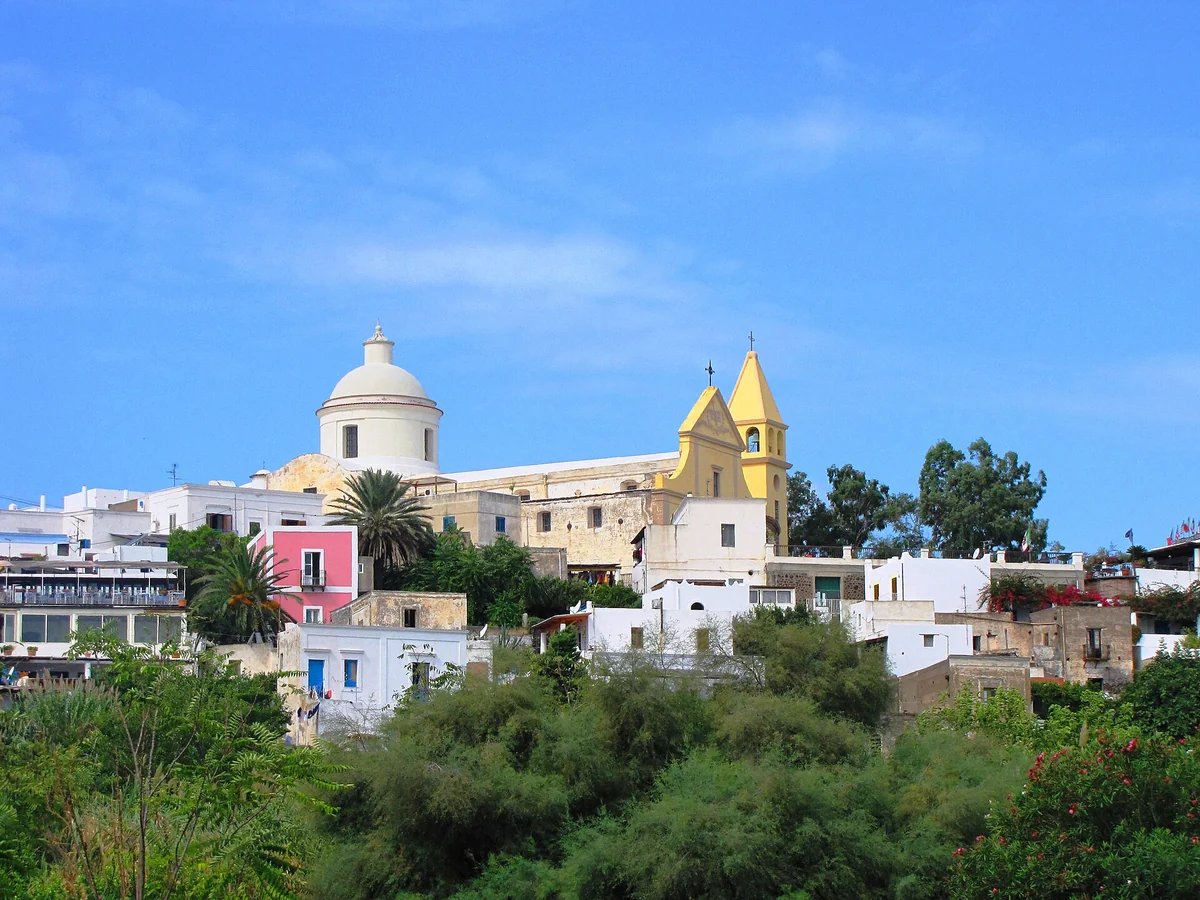
The church of San Vincenzo, a two-minute walk from the Ashàra Info Point. Photo: Hein56didden, CC BY-SA 4.0, via Wikimedia Commons
Which Version of the Hike Fits You
If You want the closest legal point to the craters and are happy climbing for two hours
The Sciara del Fuoco sunset trekking with a certified guide, to the 400 m rim viewpoint
If You want the eruption show but the full climb sounds heavy after a travel day
The lighter sunset excursion, same guides and same darkness window with less ascent
If You are counting every euro or arrived without a booking
The free paths: Piazza San Vincenzo to the Belvedere at 190 m, torch in the bag, and stay past dark for the glow
If You were picturing a summit climb
Reset the plan. Above 400 m is closed by ordinance, no operator sells the summit, and the 400 m trek is the maximum on offer
Dusk on the Sciara: the light the night boats sail for. Photo: Ji-Elle, CC BY-SA 3.0, via Wikimedia Commons
The Case For and Against the Guided 400 m Trek
What we genuinely like
- The closest point to the craters that the law allows, roughly 350 to 400 m line-of-sight on the Sciara rim
- You hear and feel the explosions, several an hour in ordinary activity, not just see a glow from the village
- Helmet, pacing and real-time volcano reading from a certified AIGAE guide are included in the price
The honest downsides
- It is not a summit hike, and marketing that says otherwise is selling the same 400 m endpoint
- Two hours uphill on scree in the heat of the late afternoon, then a headtorch descent
- Weather cancels or spoils more evenings than the volcano does, and no operator can guarantee a large burst
Who it's NOT for: Travellers who cannot walk downhill in the dark, anyone arriving on a late ferry with no time buffer, and visitors expecting to stand on the crater rim at 924 m, which no tour sells.
Can I climb Stromboli volcano?
Partly. You can walk free on paths up to 290 m above sea level on the village side, starting from Piazza San Vincenzo and passing the Belvedere at about 190 m. From 290 m to 400 m you can continue only with a certified Alpine-Volcanological Guide, under the Mayor of Lipari's standing ordinance. Above 400 m, all the way to the crater rim at 924 m, the mountain is closed, and it has been since the 2019 paroxysmal eruptions. So the true summit climb that older travel blogs describe no longer exists, and no operator sells it. The guided sunset trek to the 400 m viewpoint on the Sciara del Fuoco rim is the highest hike available on the island today.
Is it worth going to Stromboli?
The honest case rests on how unusual the volcano is. Stromboli has been in near-continuous ordinary activity for centuries, with small gas explosions at the crater rims several times an hour, and the word Strombolian is the volcanological term for that mild explosive style. A clear evening almost always shows something, because weather rather than the volcano is the usual spoiler. Add a car-free island of roughly 580 residents in a UNESCO World Heritage archipelago and the trip justifies itself for most visitors. The caveats: it takes effort to reach, boats and treks run April to early November only, and no tour can guarantee a large burst, since the rare paroxysms are years apart and unscheduled.
How many people died in the Stromboli eruption?
In the 2019 paroxysm, one hiker was killed. That eruption was a paroxysm, the rare larger explosion type, which threw material high and briefly raised the civil-protection alert level. A further strong paroxysm occurred in 2024 without fatalities. Context matters for judging the risk: paroxysms are years apart, not a daily event, the volcano is monitored around the clock by INGV with a civil-protection alert protocol, and the altitude limits were built as the response. Staying below 400 m, inside the guided band or the free zone, is the whole safety system, and the guided trek keeps groups on a rim the guides hold them back from.
How do I get to Stromboli volcano?
Fly into Catania, Palermo or Reggio Calabria, with Catania offering the most connections. Milazzo on Sicily is the practical mainland port, roughly 2.5 hours from Catania by road or train via Messina. From Milazzo, sailings to Stromboli run year-round, 8 to 13 daily in high season, by hydrofoil in 1 to 2.5 hours or car ferry in up to 6.5 hours. Inter-island boats link Lipari to Stromboli in roughly 1 to 1.5 hours, and Naples has seasonal to year-round sailings of 4.5 to 10.5 hours. There is no regular passenger ferry from Tropea. On the island there are no cars, so the village and trailheads are on foot.
Do I need a guide, and can I skip one?
You need a guide above 290 m, and that is law rather than operator policy. The Mayor of Lipari's ordinance framework restricts the 290 to 400 m band to groups with a certified Alpine-Volcanological Guide, and above 400 m is closed to everyone. Below 290 m you are free to walk alone, and the Belvedere near the old cemetery at about 190 m is a legitimate evening viewpoint for the crater glow. The guides' role is practical, not decorative: they carry helmets, set the pace, hold the group back from exposed edges and read the volcano's behaviour in real time. On an active volcano that has killed a hiker within the last decade, the requirement earns its place.
What does the Stromboli hike cost in fees?
There is no entrance ticket for the volcano itself. The mandatory payments are the Aeolian Islands disembarkation fee of $5.85 (€5) per person, usually collected in cash before boarding, and from Milazzo a seasonal port eco tax of about $5.85 (€5) per person from the start of June to the end of September, about $2.93 (€2.50) through October. The guided trek price itself is set by the operator and varies by date, so check the live listing. One competitor listing mentions a $3.51 (€3) volcano entry ticket, but no official source confirms any such fee, and the official sources to check are the volcanological guides and the Mayor of Lipari's office.