 Stromboli Volcano Tours
Best Time to Visit Stromboli, Month by Month
Choosing the best time to visit Stromboli comes down to one thing first: the boats. The island's ferries, hydrofoils and day cruises run a full timetable from April to early November, and that sailing season sets the boundaries for everything else. Inside it you pick between the busy heat of July and August, the calm of May, June and September, and the gamble of October. The volcano itself erupts in ordinary fashion all year, but you can only watch it from the water when the boats sail.
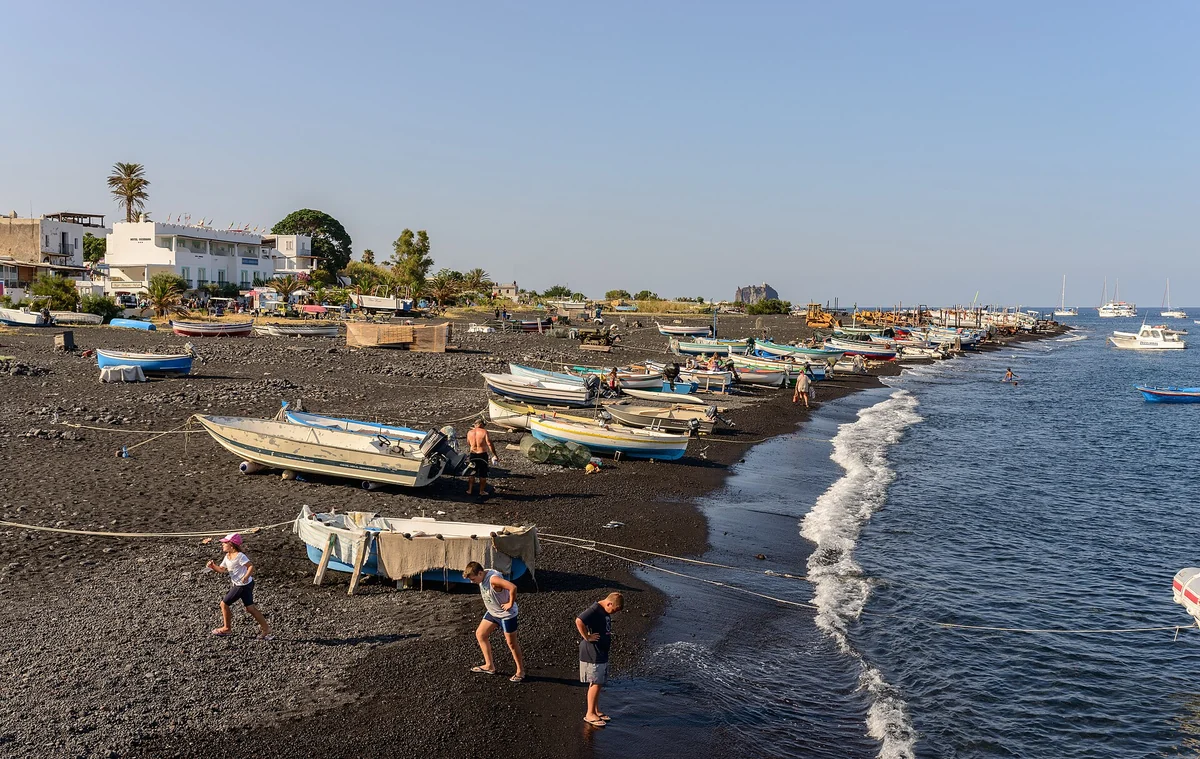
The island from the sea: cone, village and the long Sciara. Photo: Norbert Nagel, CC BY-SA 3.0, via Wikimedia Commons
Quick answer The best time to visit Stromboli is May, June or September. The sailing season is in full swing, the sea is wa…
The best time to visit Stromboli is May, June or September. The sailing season is in full swing, the sea is warm enough to swim, the villages are calmer than in high summer, and the sunset treks run on their full schedule. July and August work too if you accept crowds and heat. October is quiet but the first storms arrive. From November to March the island stays open in theory and the volcano keeps bursting, yet the hydrofoil timetable thins out so much that a day trip becomes unreliable. Book the window first, then pick from the best Stromboli volcano tours this season.
The Sailing Season Runs April to Early November
Stromboli has no airport and no bridge, so your visit is only as good as the timetable behind it.
What the timetable actually does
The Milazzo to Stromboli route runs year-round, but the frequency changes hard with the season. In high season the listing data on ferry schedules shows 8 to a dozen sailings daily, by hydrofoil in 1 to 2.5 hours or slow car ferry in up to 6.5 hours. Outside that window the inter-island hydrofoils thin out and some seasonal routes close completely.
Naples keeps a seasonal-to-year-round link at 4.5 to 10.5 hours. Messina runs seasonally, up to 4 daily, and Palermo is summer only, about 6 hours. From Calabria there is no regular passenger ferry from Tropea at all, only a seasonal hydrofoil from Vibo Valentia about 1.5 hours long, up to twice weekly.
The full route picture, port by port, is on our how to get to Stromboli page.
| Window | Boats and treks | What it means for you |
|---|---|---|
| April to early November | Full sailing timetable, all trek departures operating | Any month in this range works, pick by heat and crowds |
| Late March shoulder | First sailings resume, reduced frequency | Possible but check schedules before committing |
| November to March | Timetable collapses, inter-island links thin out | Day trips unreliable, only worth it for a long stay |
Why the season matters more than the volcano
A common assumption is that the volcano decides when to visit. In ordinary activity it does not. INGV's monitoring records small gas explosions at the crater rims several times an hour, and this behaviour has continued for centuries, which is why the mild explosive style carries the volcano's own name.
The eruptions are visible on any clear evening in season, from the water or from the 400 m viewpoint on the Sciara del Fuoco rim. What changes month to month is access: whether a hydrofoil can get you there, whether a certified guide is running departures, and how long the daylight lasts once you arrive. The island has roughly 580 residents and no cars beyond service vehicles, so when the boats pull back for winter there is very little tourist infrastructure left to catch you.
| Month | Sailing | Swimming sea | Verdict |
|---|---|---|---|
| April | Season opening | Cool | Good for treks, brisk for swims |
| May | Full timetable | Warming | Sweet spot |
| June | Full timetable | Warm | Sweet spot |
| July | Peak frequency | Warmest | Book early, expect crowds |
| August | Peak frequency | Warmest | Hottest and busiest |
| September | Full timetable | Warm | Sweet spot |
| October | Still running | Cooling | Quiet, storm risk begins |
May, June and September: The Sweet Spot
Three months give you the full season without the crush.
What you get in the shoulder months
May, June and September combine the things most visitors actually want. The sailing season is fully open, so every departure on every route operates, including the inter-island links via Lipari and Panarea. The sea has warmed enough for the swim stops that most boat itineraries build in, and in September it holds the summer's heat.
The villages of San Vincenzo and Ginostra are calmer, so accommodation costs less and the paths up to the free 290 m zone, starting at Piazza San Vincenzo through the Belvedere near the old cemetery at about 190 m, are not a queue. Sunset treks run on their normal schedule because daylight is still long enough for a departure about two hours before sundown.
| Priority | Best month | Why |
|---|---|---|
| Calmest villages | May | Season open, crowds not yet arrived |
| Warm sea plus quiet paths | June | Sea warm, schools not yet out |
| Swimming after summer | September | Sea holds its heat, season still full |
The trade-offs nobody mentions
The shoulder months are not risk-free. April can still feel cool on the water, and an evening run back from the Sciara del Fuoco needs a windproof layer even in May. September sits at the front edge of the Mediterranean's storm season, so individual days can wash out, though the month as a whole is drier than October.
Sunset timing also shifts: in May the trek departs later in the afternoon than in June, and by September the departure creeps earlier again, which affects whether a same-day arrival by hydrofoil can connect with the ascent. The practical answer is to fix your trek date first and then build the ferry around it, not the other way round, and to compare operators on the Stromboli tour price comparison before you lock anything in.
July and August: What You Trade for Peak Summer
High season is the easiest month to sell and the hardest to enjoy quietly.
The case for high summer
July and August give you maximum frequency on every route, the warmest sea of the year, and the longest evenings, which matters more here than almost anywhere. Sunset treks leave about two hours before sundown, so long daylight pushes departures into late afternoon and leaves the whole morning free for the beach or the crossing. Every tour type on the island operates at full stretch, from the 400 m guided sunset trek to the night cruises that hold position 300 to 500 m off the Sciara del Fuoco for a 30-minute eruption watch.
If your dates are school holidays, the season is built for you.
| Factor | July-August | Shoulder months |
|---|---|---|
| Sailings per day from Milazzo | Up to 13 | Fewer, still daily |
| Sea temperature | Warmest of the year | Warm but cooling at the edges |
| Crowds on paths and boats | Peak | Noticeably lighter |
| Trek departure time | Latest in the year | Earlier, shorter evenings |
The case against
July and August are the hottest and busiest months, and on a small island that shows. The climb to the 400 m viewpoint is done in the heat of late afternoon before the cooling at the top, and the safety guidance is blunt about what to carry: 1.5 to 2 litres of water per person, closed hiking shoes, and a layer for after dark. The free paths below 290 m offer little shade.
Accommodation books out and the port fills with day-trippers from Milazzo and the Calabrian cruise boats. One more thing worth knowing in any summer month: paroxysms, the rare larger explosions, have happened in July and 2019 and 2024. They are years apart and not schedulable, but the 2019 event killed one hiker and closed the crater zone above 400 m permanently.
The altitude limits with a licensed guide are the whole safety system, and they matter most when the volcano reminds you it is real.
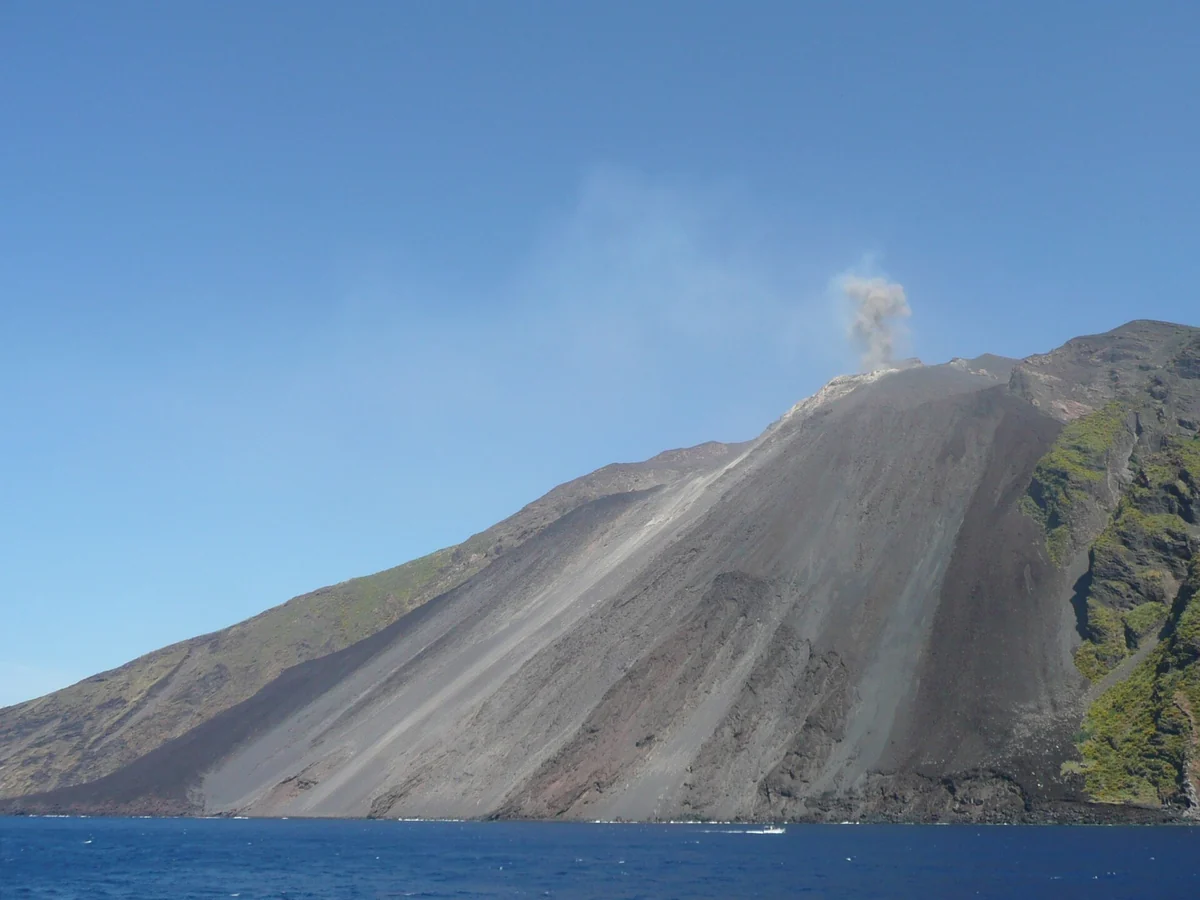
Early summer on Stromboli: green slopes before the August crowds. Photo: Delphine Bruyère, CC BY-SA 3.0, via Wikimedia Commons
October: Quiet Paths and the First Storms
October is the season's last chapter, and it splits travellers neatly.
Who October suits
If you want the island to yourself, October delivers what the other months cannot. The day crowds thin sharply, the villages go back to their roughly 580 residents, and the sailing timetable continues through the month. The Milazzo eco tax also drops from about EUR 5 per person to about EUR 2.50 from 1 October, a small signal of the season winding down.
Sunset treks still run, and with earlier sunsets the departure times move to mid-afternoon, which can suit travellers coming off a morning hydrofoil. Sea temperatures lag the air, so early October swims are still comfortable for most people. Photographers tend to like this month for the same reasons: softer light, emptier foregrounds, and crater glow against an earlier sky.
| October fact | Detail | What it means for you |
|---|---|---|
| Sailings | Timetable still operating | Bookable, but check frequency late month |
| Eco tax | About EUR 2.50 from 1 to 31 October | Slightly cheaper port costs |
| Weather | First storms possible | Build a buffer day into the plan |
| Trek departures | Earlier afternoon starts | Doable on a day trip, just |
The risk you accept
October is when the first storms of the autumn arrive, and on an island reached only by water a cancelled sailing is not an inconvenience, it is a changed plan. Seas can ground the hydrofoils for a day at a time. Day-trippers are the most exposed, because a missed return sailing leaves few alternatives.
If you travel in October, do it with at least one spare day on either side, and prefer booking terms that let you move the trek to another date. The same logic applies late in the month more than early: the season's last departures trail into early November, and the timetable only thins as it goes.
Winter: The Volcano Works, the Boats Do Not
November to March is the honest no-season, and it is worth understanding why.
What stays open
The volcano does not pause. Ordinary Strombolian activity has continued for centuries, with small gas explosions several times an hour, and the winter months are no different. On a clear night the glow over the Sciara del Fuoco is visible from the village, and the free Belvedere near the old cemetery at about 190 m gives the same view paying visitors chase in summer.
The Milazzo-Stromboli route technically runs year-round, so a determined traveller in, say, February can get there. Some residents stay, the paths are walkable on fair days, and costs on the island drop. For anyone who wants the volcano and the silence rather than the tours, winter has a stripped-back appeal.
| Element | In season | In winter | Practical call |
|---|---|---|---|
| Eruptions | Visible on clear nights | Visible on clear nights | Volcano is not the constraint |
| Sailings | Up to 13 daily from Milazzo | Thin, unreliable for day trips | Winter needs an overnight stay |
| Guided treks | Daily departures | Not stated as running | Do not plan a winter trek |
| Swim stops | Standard part of itineraries | Off the table | Choose summer for the sea |
What does not, and why it matters
The full sailing timetable collapses in winter. Inter-island hydrofoils thin out, the seasonal routes from Messina, Palermo and Reggio Calabria close, and the day-cruise operations that bring most visitors from Tropea and the Calabrian coast stop for the season. Sunset treks are effectively a fair-weather product: they run when the light is long, roughly April to October, and there is no listing basis for planning one between November and March.
Add shorter days, colder crossings and the real chance of a weather-bound island, and the winter equation only balances if you are staying overnight with flexible ferry dates. For nearly everyone planning a visit measured in hours rather than weeks, the honest advice is to wait for the sailing season.
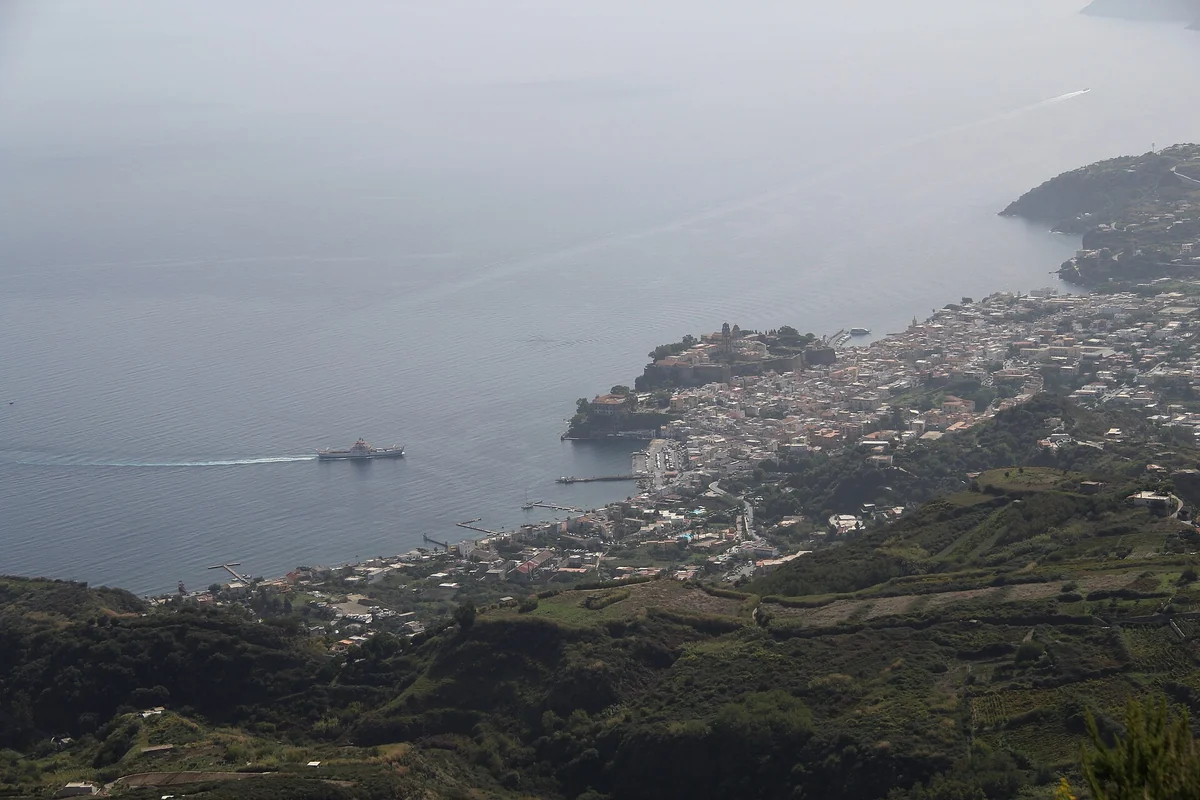
Lipari town from above: the largest base in the archipelago. Photo: GerritR, CC BY-SA 4.0, via Wikimedia Commons
How Sunset Timing Shapes Your Trek
On Stromboli the day is planned backwards from dusk, and that decides which month works for you.
The two-hours-before rule
Sunset treks leave about two hours before sundown. The guided route climbs from the village side into the guided zone between 290 m and 400 m, where access is only legal with a certified Alpine-Volcanological Guide under the Mayor of Lipari's standing ordinance. The path ends on the eastern rim of the Sciara del Fuoco at 400 m, roughly 350 to 400 m line-of-sight from the craters, close enough that you hear and feel the explosions as much as see them.
Groups time the ascent so they stand on the rim as the light dies and the crater glow takes over. That timing requirement is why treks run roughly April to October, when the evenings are long, and why the departure hour moves through the season: later in June, earlier in October. Two ways to do it exist.
The guided ascent on foot is described on our Sciara del Fuoco sunset trekking page, and the boat-based option, which holds off the Sciara after dark instead of climbing, is on our sunset excursion page.
| Option | Where you watch from | Best for |
|---|---|---|
| Guided trek to 400 m | Sciara rim, 350-400 m from the craters | Sound, scale and the climb itself |
| Boat hold off the Sciara | 300-500 m offshore after dusk | Glow reflected in the water, no hike |
| Village Belvedere, about 190 m | Free path above the cemetery | No cost, do it yourself |
What you will actually see
Manage expectations and the reward is nearly guaranteed. In ordinary activity the craters burst several times an hour, so a clear evening almost always shows something, from either the rim or the water. The usual spoiler is weather, not the volcano: cloud on the summit or a rough sea cancelling the boat hold.
A large paroxysm is a different category of event, rare and unscheduled, and no tour can promise one. Note also that nothing above 400 m is legal, so any listing that says 'summit' is selling the same 400 m trek under a grander name. Bring the listed kit: 1.5 to 2 litres of water per person, closed hiking shoes and a warm layer for the top, or swimwear and a windproof layer if you are watching from the boat.
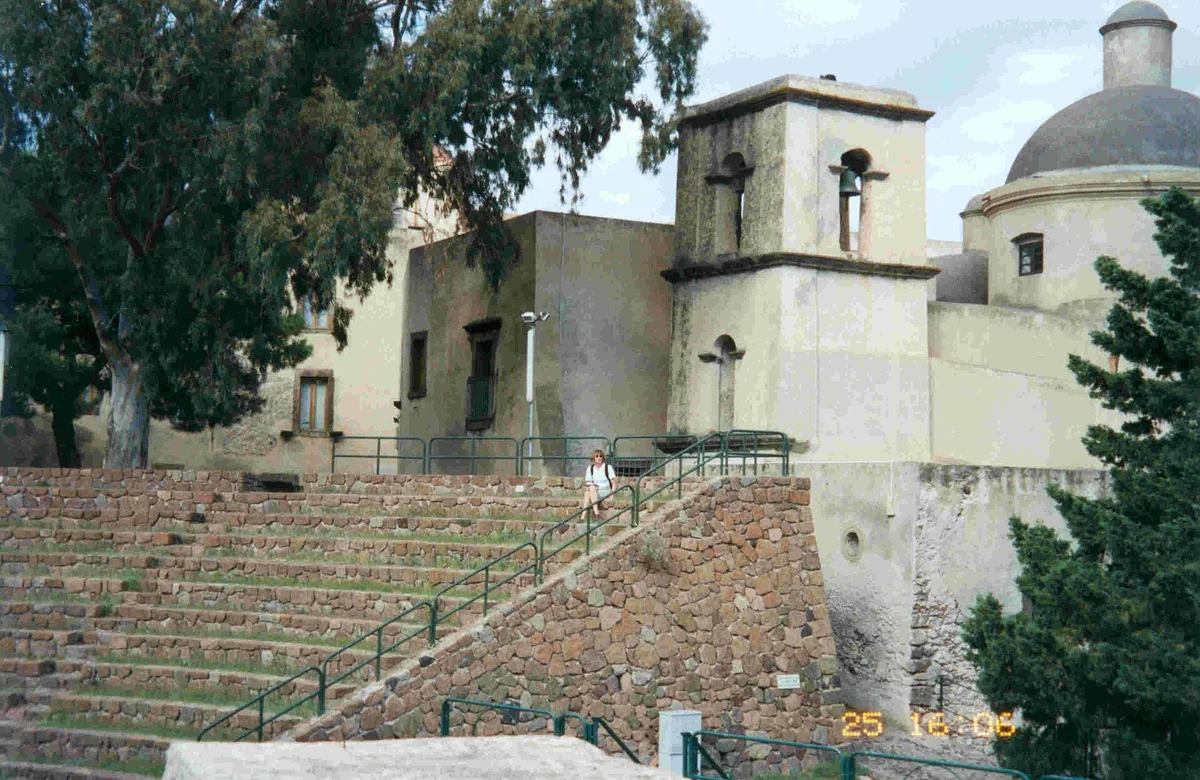
Lipari's harbour, departure point for the inter-island hops. Photo: upyernoz, CC BY 2.0, via Wikimedia Commons
Pick Your Window
If You want calm paths, warm sea and full schedules
May, June or September. Book the trek first, then the ferry around it
If Your dates are school holidays
July or August. Book weeks ahead, carry the full water ration, expect company everywhere
If You want the island quiet and accept a weather gamble
October, with a buffer day on each side and flexible trek terms
If You only have winter dates
Plan an overnight stay around the thin timetable, or wait for April
The Case For and Against Going in the Shoulder Months
What we genuinely like
- Full sailing timetable on every route, including Lipari and Panarea links
- Sea warm enough for the swim stops without peak heat on the climb
- Villages and free paths below 290 m noticeably calmer
- Sunset treks run on their normal schedule with long evenings
The honest downsides
- September sits at the front edge of storm season, so single days can wash out
- Sunset departures come earlier than in midsummer, tightening day-trip connections
- Evening crossings need a windproof layer even on fair days
Who it's NOT for: Travellers who need guaranteed midsummer sea warmth, and anyone whose only free dates fall between November and March.
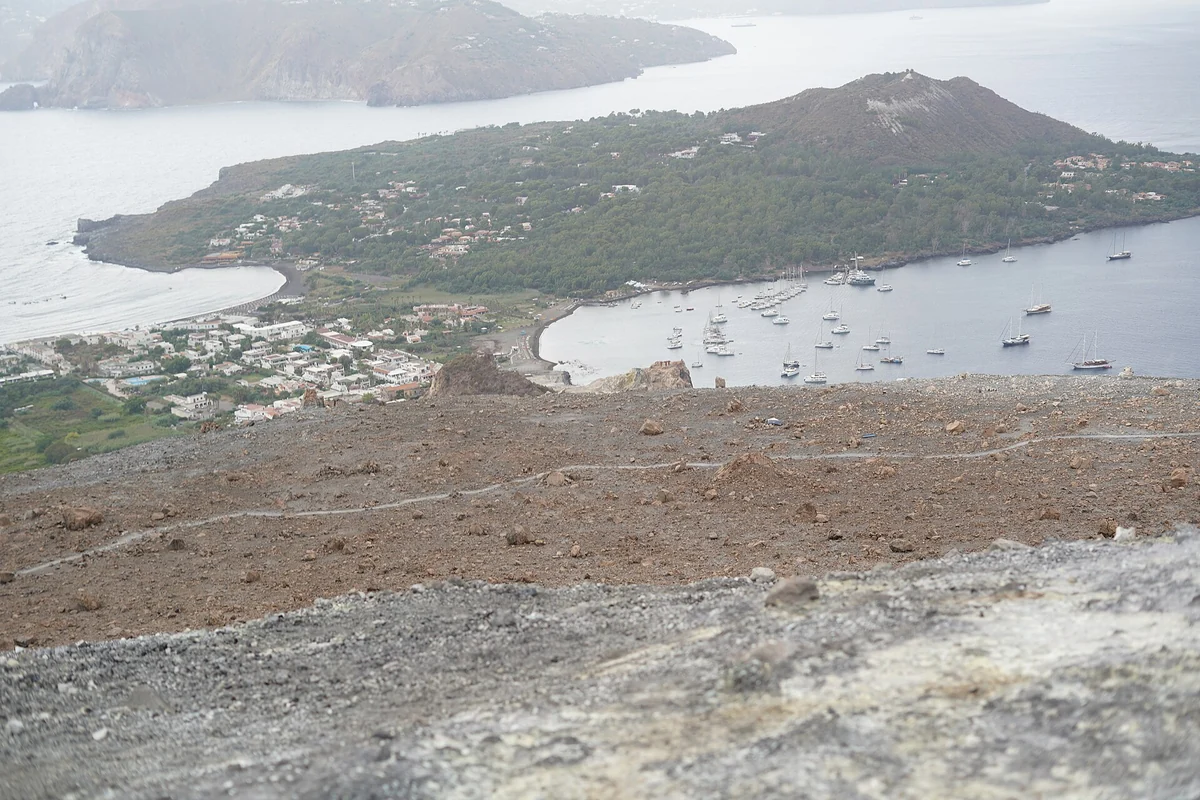
Down from Vulcano's crest: the archipelago's other walkable volcano. Photo: Francesco Tosoni, CC BY-SA 4.0, via Wikimedia Commons
Questions People Ask About Timing a Visit
Does Stromboli erupt every night?
Effectively yes, in the sense that counts for visitors. The volcano has been in near-continuous ordinary activity for centuries, with small gas explosions at the crater rims several times an hour, visible as glow and bursts after dark whenever the sky is clear. That mild style is so characteristic that volcanologists named it after the island. What you cannot predict is size. A clear evening in season almost always shows something from the boat hold off the Sciara del Fuoco or the 400 m rim viewpoint. The rare large paroxysms, like those in 2019 and 2024, are years apart and never scheduled.
Is Stromboli island worth visiting?
The listings and the monitoring data make a strong case. It is one of the most active volcanoes on Earth, in steady ordinary activity you can watch safely from legal distances, and the island itself is a UNESCO World Heritage site with two villages, no cars, and a free viewpoint at about 190 m above the water. The honest limits are logistical: roughly 580 residents, no airport, and a sailing season that runs April to early November. If you come in season with a flexible day or two, the eruption watch plus a sunset trek or swim stop is a hard day to match anywhere in the Mediterranean.
What is the best month to go to Sicily, Italy?
For Sicily as a whole, May, June and September are the usual answer, and for Stromboli specifically they are exactly right too. The sailing season is fully open, the sea is warm enough to swim, the villages are calmer than in July and August, and sunset treks run on their normal schedule with long evenings. Sicily's cities are pleasant in those months as well, which matters because Milazzo, the practical mainland port, is about 2.5 hours from Catania by road or train. If your trip is built around the volcano, fix the trek date first and work the mainland itinerary around it.
How far is Stromboli from Sicily?
About 55 km north of the Sicilian coast at Milazzo, which is the port most visitors use. The crossing runs 1 to 2.5 hours by hydrofoil, or up to 6.5 hours on the slow car ferry, with 8 to a dozen sailings daily in high season. From Messina the seasonal crossing takes 2 to 4.5 hours, from Palermo about 6 hours in summer, and from Naples 4.5 to 10.5 hours on the longer seasonal-to-year-round route. Stromboli is the northernmost of the seven Aeolian Islands, with Lipari roughly 1 to 1.5 hours away and Panarea 20 to 40 minutes further on.
Do I need to book a Stromboli tour in advance?
In July and August, yes: the trek groups cap at 25 and the big boats fill their decks days ahead. In the shoulder months a few days of lead time is usually enough. Every listing on this site carries free cancellation to 24 hours, so booking early costs you nothing if the weather turns.