 Stromboli Volcano Tours
How to Get to Stromboli: Every Route That Works
Stromboli has no airport and no bridge, so every route to the island ends on a boat. The northernmost of the Aeolian Islands sits about 55 km north of the Sicilian coast at Milazzo, and knowing how to get to Stromboli mostly means knowing which port fits your trip. Milazzo is the workhorse, Naples is the long-distance link, and a handful of seasonal routes fill the gaps. This page lays out each one, including the Tropea route that is not a ferry at all. Read it in order and you will know which port to aim for, which operator to book, and what the crossing costs you beyond the ticket price.
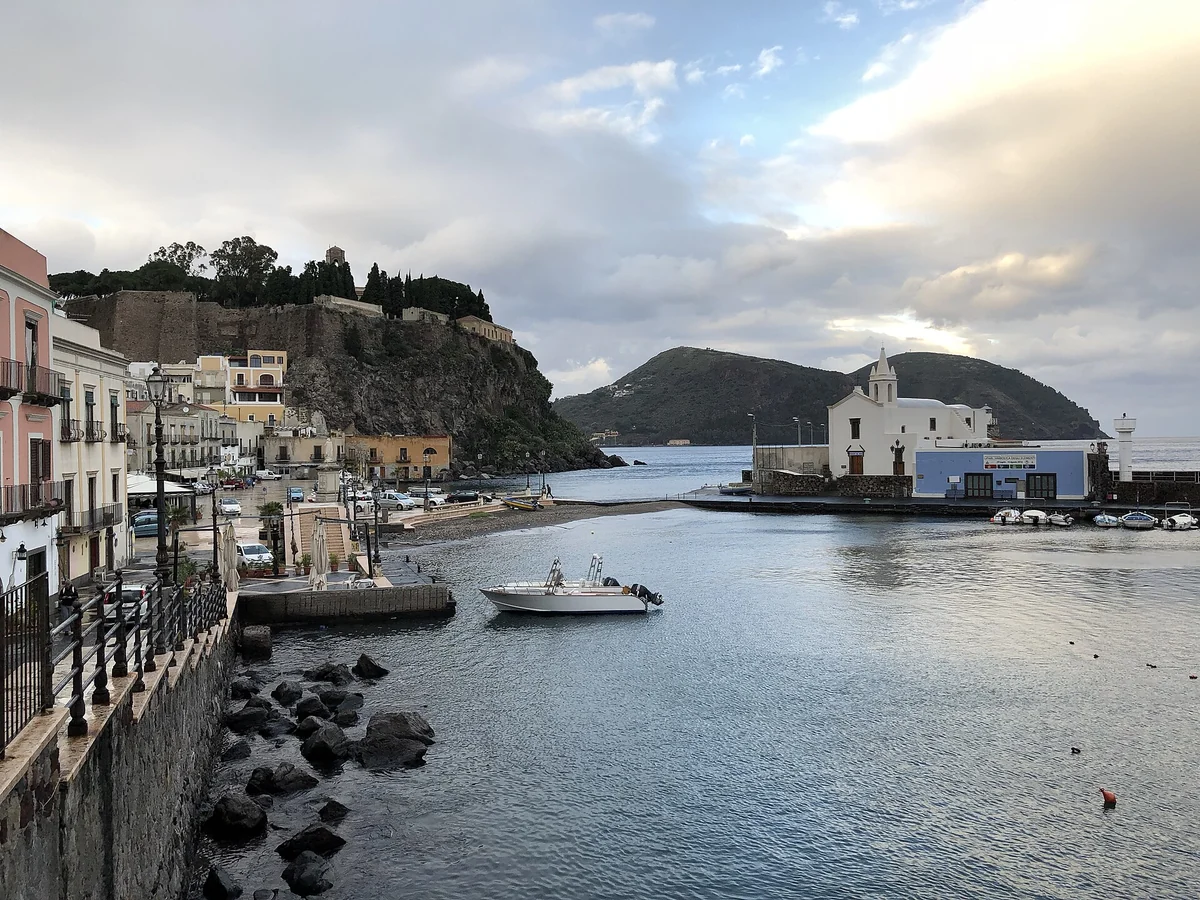
Marina Corta by day: the inter-island hop to Stromboli leaves from here. Photo: Davide Mauro, CC BY-SA 4.0, via Wikimedia Commons
Quick answer Milazzo hydrofoil is the workhorse route; Tropea has no ferry, only cruises
Flying In: The Three Airports That Feed the Island
Catania, Palermo and Reggio Calabria
Stromboli has no airstrip. The nearest airports are Catania (CTA), which has the most connections, Palermo (PMO) and Reggio Calabria (REG). Catania is the default choice for most itineraries because of flight availability, and because Milazzo, the practical mainland port, is roughly 2.5 hours away by road or train via Messina.
Palermo makes sense if the fare or the flight times are better on the western side of Sicily, because it pairs with the summer daily sailing from Palermo port. Reggio Calabria is the closest airport to the Calabrian coast, so it feeds the seasonal crossings from that side. The table below sets out what each airport actually decides for your trip, and the deciding column is the one to read before you book flights.
A cheap arrival airport is no bargain if it strands you a coast away from the only sailing you can still catch. Once the crossing is settled, the route brief for the volcano walk and the month-by-month island calendar shape the rest of the plan.
| Airport | Why pick it | What it decides |
|---|---|---|
| Catania (CTA) | Most flight connections | Best chance of a same-day ferry connection at Milazzo |
| Palermo (PMO) | Western Sicily entry point | Works with the summer Palermo to Stromboli sailing |
| Reggio Calabria (REG) | Closest airport to Calabria | Feeds the seasonal crossings from the Calabrian coast |
Making the connection count
The train and the motorway both run along the Sicilian coast to Messina and then out to Milazzo. Plan for the 2.5-hour transfer when you book flights, and remember the timetable collapses outside the sailing season of April to early November. A flight that lands at 18:00 in shoulder season may mean an overnight in Milazzo rather than a same-evening arrival on the island, and Milazzo is a working port town, not a place people cross the sea to linger in.
The safer pattern is a morning or early afternoon landing, which leaves buffer for a delayed flight, a slow train or a full hydrofoil. The train from Catania and the stations along the coast stops at Milazzo itself, so the port is a short walk or taxi ride from the station. Milazzo also charges a seasonal port eco tax, about $5.85 (€5) per person from 1 June to 30 September and about $2.90 (€2.50) from 1 to 31 October, collected separately when it applies.
Keep some euros in cash for it, because it is not folded into the ferry ticket. Land early, budget the tax, and the same-day connection usually works.
Milazzo: The Workhorse Port
The one route that never stops
Milazzo to Stromboli is the only year-round link to the island. Three operators run it: Liberty Lines, Siremar and SNAV. A hydrofoil takes 1 to 2.5 hours depending on the service and stops.
The slow car ferry takes up to 6.5 hours, which is a different day out entirely, and on this island it is largely pointless because there are no cars for visitors beyond service vehicles. In high season there are 8 to a dozen sailings daily, so a missed boat is an inconvenience rather than a ruined trip. In winter the route thins out, but it never disappears entirely, which is what makes Milazzo the port that guarantees you can always get home.
Full timetables and connections are listed on ferryhopper.com and with the operators directly, including libertylines.it.
| Service | Crossing time | Frequency | Best for |
|---|---|---|---|
| Hydrofoil (Liberty Lines, Siremar, SNAV) | 1 to 2.5 hours | 8 to 13 daily in high season, year-round | Day trips and fast arrivals |
| Car ferry | Up to 6.5 hours | Year-round, fewer sailings | Bringing a vehicle, though Stromboli has no cars beyond service vehicles |
Building a day trip around the timetable
The frequency is what makes Milazzo the base for most first-time visitors. A morning hydrofoil out, an afternoon on the island or a night watching the crater from the water, and a late sailing home is a workable day in season. The 8 to 13 daily sailings also mean you can change plans mid-day without penalty, something no other route to the island allows.
That is exactly the shape of the Stromboli boat trip by night from Milazzo, which reads the timetable the other way round and puts you off the Sciara del Fuoco after dark instead of racing the last hydrofoil. Note that boats and treks run April to early November, and in winter even the Milazzo route thins out, so a December day trip is not something to plan around. If your dates fall outside the season, treat the crossing as a point-to-point transfer rather than a day out, and book accommodation on the island rather than expecting a same-day return.
The Longer Crossings: Naples, Messina, Palermo and Reggio Calabria
Naples, the long-haul link
Naples connects to Stromboli seasonally and, on some services, year-round. The crossing takes 4.5 to 10.5 hours depending on the vessel and the stops, and SNAV runs several departures daily in summer. It is the route that saves the flight to Sicily: if you are starting from Rome or the north, a night or long day on a ferry from Naples puts you at the island without changing airports.
Trains from Rome reach Naples quickly, so the whole journey can be rail and sea. The trade is time. A 10.5-hour crossing eats most of a travel day, and the slowest services may not dock until evening.
Book a cabin or a deck seat accordingly, because 10.5 hours is a proper crossing, and check whether your sailing stops at the other Aeolian islands before yours, since every stop adds to the total. For travellers who dislike flying anyway, it is the most comfortable way in.
The Sicilian and Calabrian alternatives
Messina runs seasonal sailings, up to 4 daily, taking 2 to 4.5 hours, which can suit travellers already on the Messina side of Sicily or arriving by train from the mainland through the strait. Palermo has a summer daily service of about 6 hours, which pairs with flights into Palermo airport. From Reggio Calabria the seasonal crossing takes about 3 hours 45 via Lipari with a connection, so it is a two-leg trip rather than a direct one and a missed first leg means a missed day.
Source for all of these: ferryhopper.com. On the Calabrian coast, Vibo Valentia also has a seasonal hydrofoil of about 1.5 hours running up to twice weekly, the fastest sea link from the mainland once it matches your dates. Tropea itself is the exception, covered below, because it has no regular passenger ferry at all.
| Port | Season | Crossing time | Notes |
|---|---|---|---|
| Naples | Seasonal to year-round | 4.5 to 10.5 hours | Several daily in summer, SNAV |
| Messina | Seasonal | 2 to 4.5 hours | Up to 4 daily |
| Palermo | Summer | About 6 hours | Daily |
| Reggio Calabria | Seasonal | About 3 hours 45 | Via Lipari with a connection |
| Vibo Valentia | Seasonal | About 1.5 hours | Up to twice weekly |
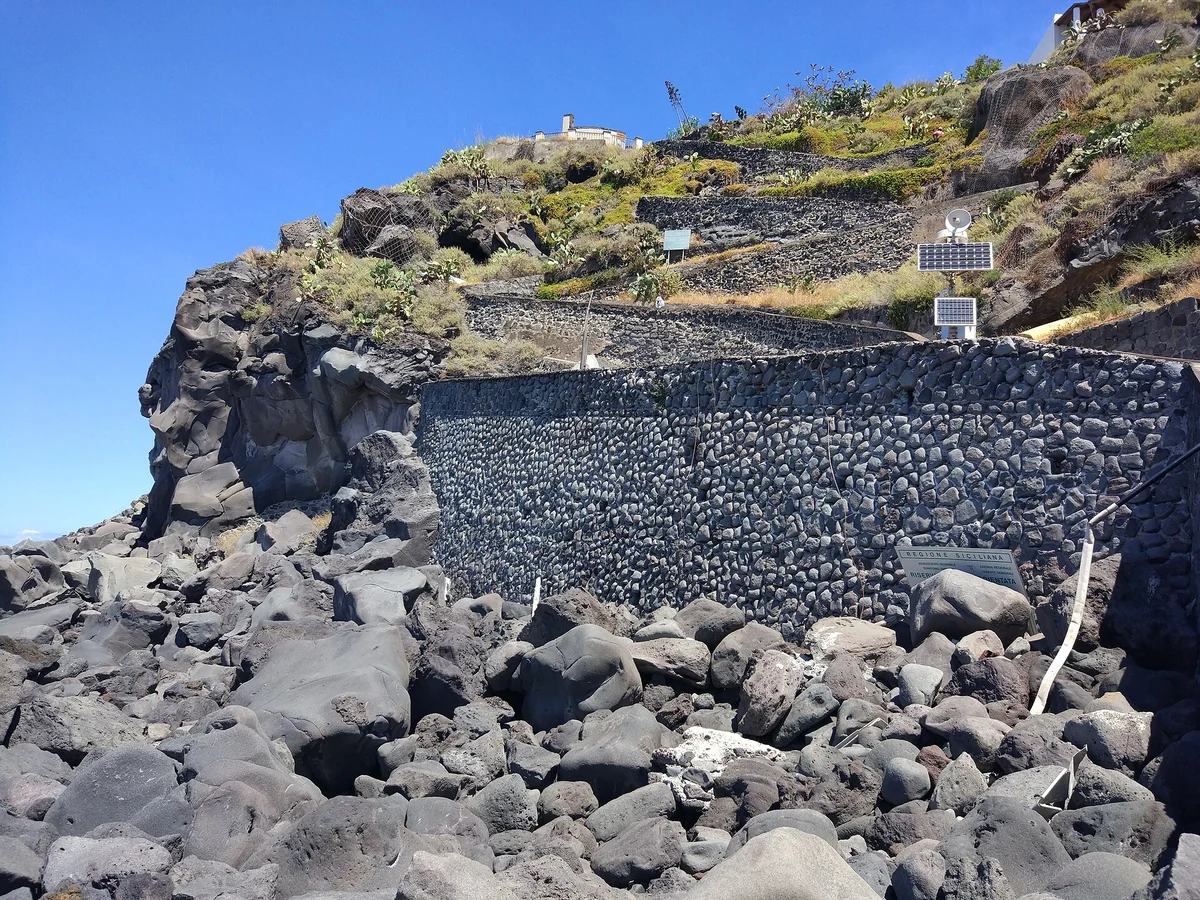
Ginostra from its port: the road-less village on the far side. Photo: Shayshal2, CC BY-SA 4.0, via Wikimedia Commons
Inter-Island Hops: Lipari, Panarea and Ginostra
Hopping the archipelago
If you are island-hopping the Aeolians, Stromboli is a short leg. Lipari to Stromboli takes roughly 1 to 1.5 hours on frequent inter-island links, and Panarea is 20 to 40 minutes further on. Panarea matters as a staging point: many crossings from the south stop there before or after Stromboli, so a two-island day is common, and in season the little harbour at Panarea fills with day boats doing exactly that loop.
The archipelago as a whole is a UNESCO World Heritage site, and seeing it from the deck between islands is half the point of arriving this way. Ferryhopper lists Stromboli as having direct connections to 18 ports, which is why the island is easier to reach than its isolation suggests. If a route from your chosen port does not exist, there is often a connection through Lipari or Milazzo on the same day.
Ginostra, the other village
Stromboli itself has two settlements. Ginostra, on the southwest side, is 10 to 15 minutes by boat from Stromboli port and has no road access. Small passenger boats, locally called the pezzo d'andata, connect the two, and there are no cars on the island beyond service vehicles anyway.
Treat Ginostra as an add-on rather than a base, because it has no volcano-path tourism infrastructure worth planning around, though the access ordinance does allow free walking within lower limits on its side. The practical consequence: everything on Stromboli happens on foot or by small boat, so pack for walking from the moment you step off the hydrofoil. Check return sailing times for Ginostra before you commit to a visit, because the connections are thinner than the main port's and being stuck there overnight is a real possibility rather than a joke.
The Tropea Exception: Cruises, Not Ferries
Why there is no Tropea ferry
The most-asked Calabria question has a blunt answer: there is no regular passenger ferry from Tropea to Stromboli. The nearest thing is the seasonal hydrofoil from Vibo Valentia, about 1.5 hours, running up to twice weekly, and Vibo Valentia is a separate port that needs its own journey to reach. Tropea works through day-cruise operators such as Savadori instead.
That is why every from-Tropea trip on the market is a cruise and not a ferry crossing, and it changes what you should expect from the day. The table below sets the three real options side by side for anyone starting on the Calabrian coast, because the right pick depends on whether you want the volcano from the water or want to stand on the island itself.
| Option | What it is | Who it suits |
|---|---|---|
| Day cruise from Tropea | Operator-run boat trip, eruption watch after dark off the Sciara del Fuoco | Calabria-based visitors who want one evening on the water |
| Vibo Valentia hydrofoil | Seasonal passenger ferry, about 1.5 hours, up to twice weekly | Independent travellers who can match a sparse timetable |
| Drive and sail from Milazzo | Road or train to Milazzo, then the year-round hydrofoil | Anyone who wants schedule freedom |
What a cruise gives you that a ferry does not
A ferry delivers you to the port. A cruise holds position 300 to 500 m off the Sciara del Fuoco after dusk for about 30 minutes, with the crater glow and bursts reflected in the water, which is the classic view. The Stromboli by night cruise from Tropea is built around exactly that hold. The trade-off is time on land: a cruise is an evening at sea, while the Milazzo route lets you walk the village, climb to the free Belvedere viewpoint at about 190 m, or join a guided trek.
To compare every Stromboli boat tour side by side is the fastest way to see which shape of evening you are buying. Ferry ticket fares are not stated in the sources used here, so check current prices with the operators or on ferryhopper.com before booking. Figures on this page are drawn from the published timetables.
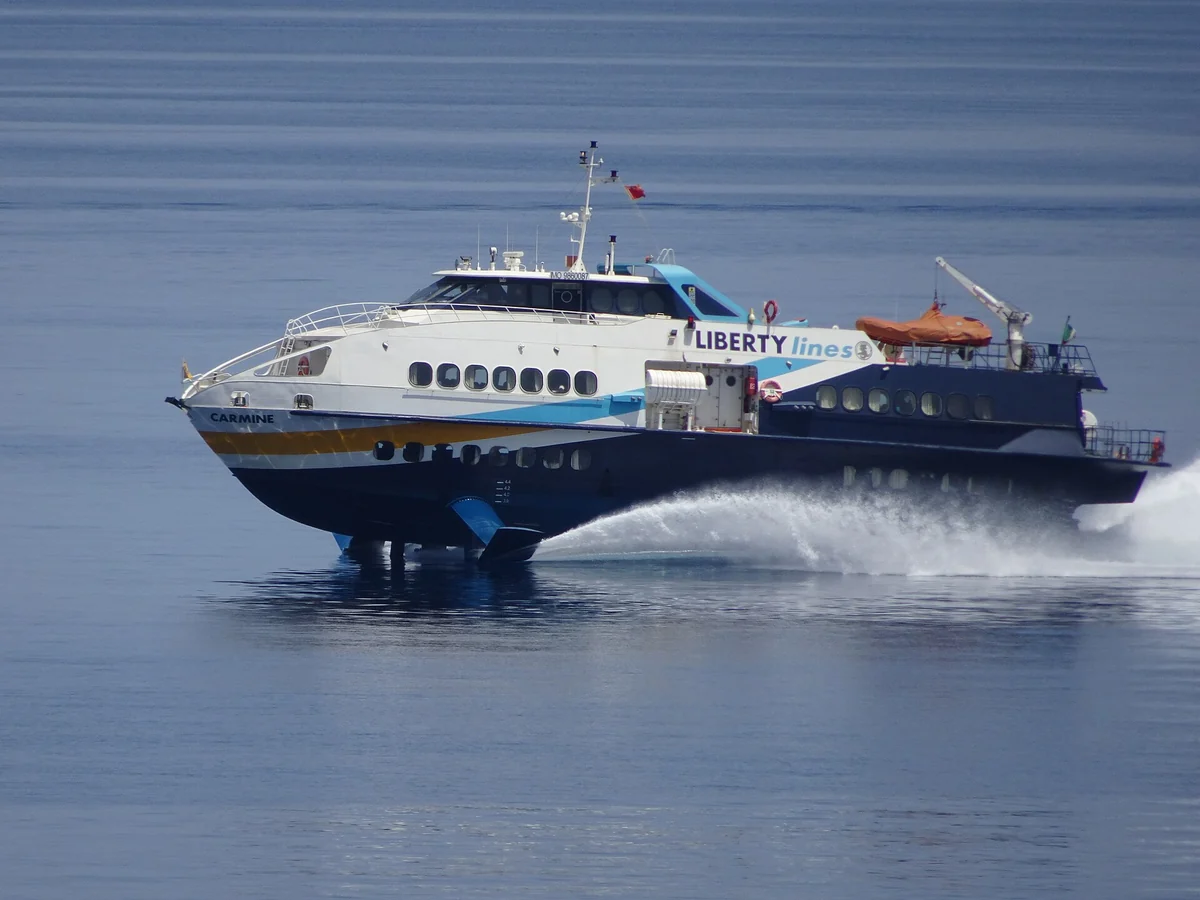
A Liberty Lines hydrofoil on the Aeolian run. Photo: Badadaba, CC BY-SA 4.0, via Wikimedia Commons
Walking the Island at the End of the Crossing
The altitude rules once you land
Every route on this page ends at the same small port in the village of San Vincenzo, and from there the island is on foot. The access rules are worth knowing before you book, because they cap how high any route can take you. Paths up to 290 m above sea level are free and need no guide, starting from Piazza San Vincenzo and passing the Belvedere viewpoint near the old cemetery at about 190 m.
From 290 m to 400 m, access is only with a certified Alpine-Volcanological Guide (AIGAE) under the Mayor of Lipari's standing ordinance. Above 400 m, up to the crater rim at 924 m, the zone has been closed since the 2019 paroxysmal eruptions. The licensed-guide requirement is law on this volcano, not a sales device, and it is enforced.
What that means for planning
No operator sells a true summit hike today. Listings that say summit sell the 400 m guided sunset trek, which ends on the eastern rim of the Sciara del Fuoco roughly 350 to 400 m line-of-sight from the craters, close enough that you hear and feel the explosions as much as see them. If your crossing is a day trip with no trek booked, the free Belvedere still shows the night glow, and the craters burst several times an hour in ordinary activity, so a clear evening almost always shows something.
Bring 1.5 to 2 L of water per person and closed hiking shoes for any walk above the village, and a torch for the walk back from the Belvedere after dark. The volcano itself has no entrance ticket. The only mandatory payments are the $5.85 (€5) Aeolian landing fee, collected in cash at the port or ticket office on most sailings, and the seasonal Milazzo eco tax when it applies.
Choose your viewpoint before you book the crossing, because it decides how long you need on the island.
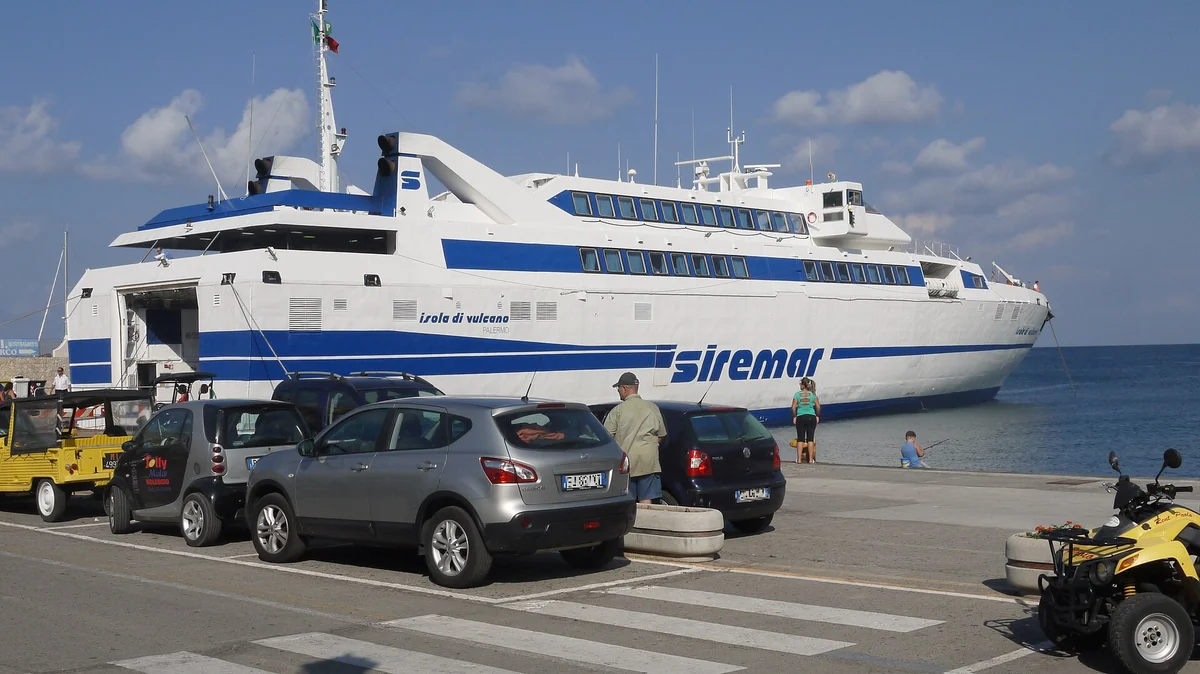
The inter-island ferry at Vulcano, one hop from Stromboli's line. Photo: Isjc99, CC BY-SA 4.0, via Wikimedia Commons
Which Route Fits Your Trip
If You are flying into Sicily for the volcano
Catania to Milazzo by road or train, then the year-round hydrofoil. Most flights, most sailings, most flexibility
If You are starting from Rome or the north
Naples by ferry, 4.5 to 10.5 hours, several daily in summer. It skips a second flight
If You are based in Calabria for the week
A night cruise from Tropea for the eruption watch, or the Vibo Valentia seasonal hydrofoil if you can match its sparse timetable
If You are already island-hopping the Aeolians
The inter-island hop from Lipari, 1 to 1.5 hours, usually via or via Panarea
If You want a day trip and hate early starts
Book a night boat from Milazzo so the crossing and the crater watch are one ticket
Ferry Versus Cruise: The Case For and Against
What we genuinely like
- The Milazzo hydrofoil runs year-round with 8 to 13 daily sailings in high season, so plans can flex
- Ferry travel puts you on the island, where the free paths and the Belvedere viewpoint cost nothing
- Direct links exist from 18 ports, so the island is reachable from Sicily, Calabria and Campania
The honest downsides
- Outside April to early November the timetable collapses and day trips become unreliable
- Tropea has no regular passenger ferry, so Calabria-based visitors must accept a cruise or a drive to Milazzo
- The landing fee of $5.85 (€5) per person is collected in cash on most sailings, so carry euros
Who it's NOT for: Anyone hoping to drive on the island, because there are no cars beyond service vehicles, and anyone planning a winter summit-style walk, because nothing above 400 m is open and no operator sells it.
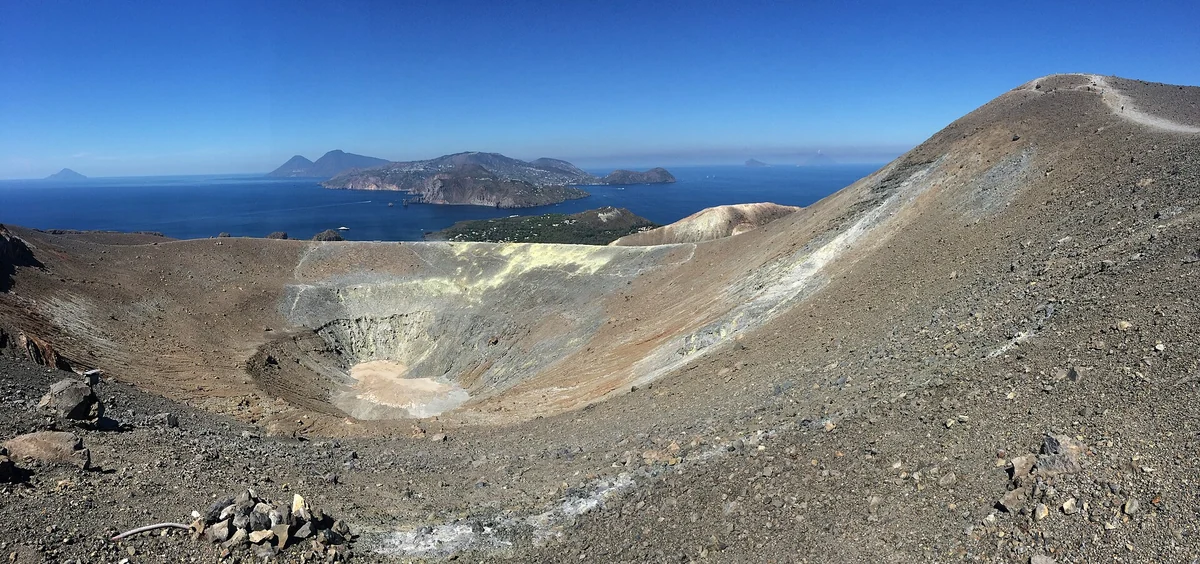
Vulcano, the steaming neighbour on the same ferry line. Photo: kallerna, CC0, via Wikimedia Commons
How do you get to the island of Stromboli?
By boat, always. Fly into Catania (CTA), Palermo (PMO) or Reggio Calabria (REG), reach a mainland port, and sail. Milazzo in Sicily is the practical choice, about 2.5 hours from Catania by road or train via Messina, with year-round hydrofoils taking 1 to 2.5 hours and up to a dozen sailings daily in high season. Naples runs longer seasonal crossings of 4.5 to 10.5 hours. Calabria offers a seasonal hydrofoil from Vibo Valentia and cruise-only departures from Tropea. There is no airport on the island and no road link, so the crossing is the final leg of every itinerary. Work out which port fits your starting point first, then book flights and sailings around it.
How do I get to Stromboli by ferry?
Buy a ticket for one of the three operators on the Milazzo route, Liberty Lines, Siremar or SNAV, and board at the Milazzo port. The hydrofoil crossing takes 1 to 2.5 hours and the car ferry up to 6.5 hours. In high season there are 8 to a dozen sailings daily and the route runs all year, though it thins in winter. From elsewhere, Messina has seasonal sailings up to 4 daily, Palermo a summer daily service of about 6 hours, and Reggio Calabria a seasonal crossing of about 3 hours 45 via Lipari with a connection. Timetables are published on ferryhopper.com and the operators' sites, so check the sailing that matches your arrival before locking in flights.
How do I get a boat from Naples to Stromboli?
SNAV runs the Naples to Stromboli service, seasonal to year-round depending on the period, with several departures daily in summer. The crossing takes 4.5 to 10.5 hours depending on the vessel and the stops, so it is a long day or an overnight. Check the SNAV schedule and book ahead for summer dates, when the boats fill. Naples is the useful route if you are starting from Rome or further north, because it avoids a flight to Sicily entirely. On arrival you dock at Stromboli port in the San Vincenzo village, and the island's paths, the Belvedere viewpoint and the guided 400 m trek all start within walking distance of the dock.
Is there a ferry from Tropea to Stromboli?
No. There is no regular passenger ferry from Tropea. The nearest ferry option is the seasonal hydrofoil from Vibo Valentia, about 1.5 hours, running up to twice weekly. Tropea itself is served by day-cruise operators such as Savadori, which is why the from-Tropea trips on the market are cruises. They sail in the evening and hold off the Sciara del Fuoco after dark for the eruption watch, which suits a Calabria-based visitor who wants the volcano from the water. If you want time on the island itself, drive or take the train to Milazzo and use the year-round ferry route instead of waiting for a Tropea sailing that does not exist.
Can you do Stromboli as a day trip?
Yes, in season. From Milazzo the hydrofoil takes 1 to 2.5 hours with up to a dozen sailings daily in high season, so a morning out and an evening return is workable from April to early November. Boats and treks run in that season only, and the full timetable collapses in winter. A day trip gives you the free village paths up to 290 m, the Belvedere viewpoint at about 190 m for the night glow, or a guided trek to 400 m with a certified guide. In ordinary activity the craters burst several times an hour, so a clear evening nearly always shows something. Weather, not the volcano, is the usual spoiler, so keep a spare day in the plan if the crossing matters to you.
How much does the crossing cost and what fees apply?
Ferry ticket prices are not stated in the sources used here, so check current fares on ferryhopper.com or with Liberty Lines, Siremar and SNAV directly. What is fixed are the fees. The Aeolian Islands disembarkation fee is $5.85 (€5) per person, collected in cash at the port or ticket office before boarding on most sailings. The Port of Milazzo eco tax adds about $5.85 (€5) per person from 1 June to 30 September and about $2.90 (€2.50) from 1 to 31 October. There is no entrance ticket for the volcano itself, so budget the crossing, the landing fee and any port tax, and keep enough euros in cash to cover both fees at boarding.